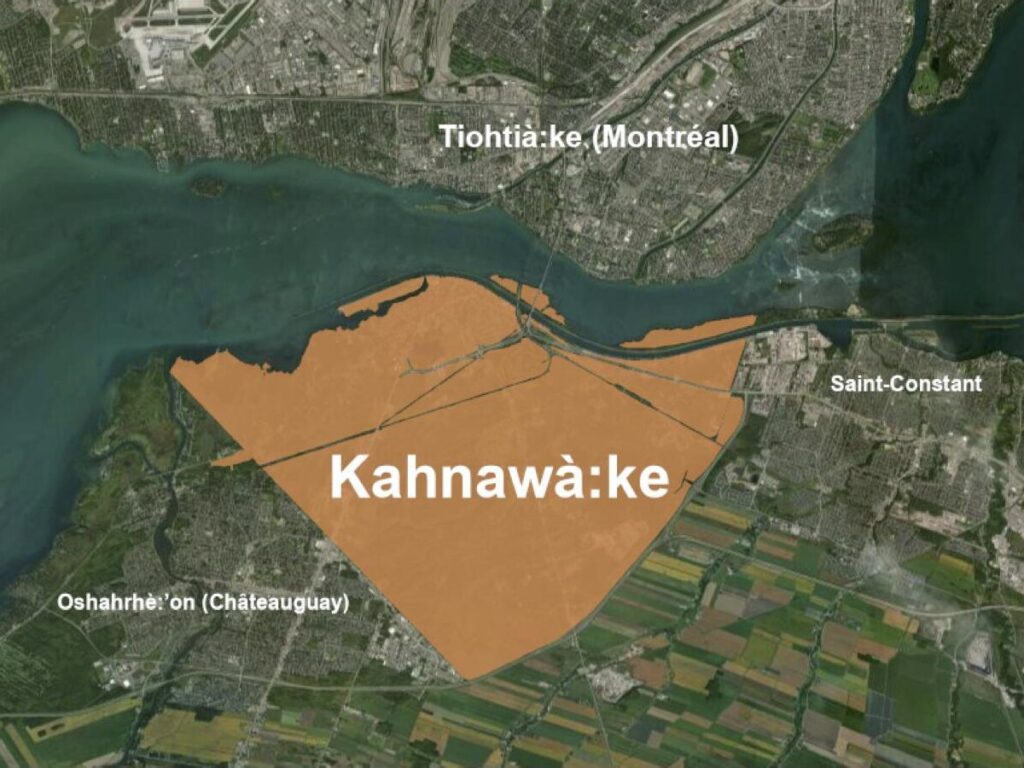
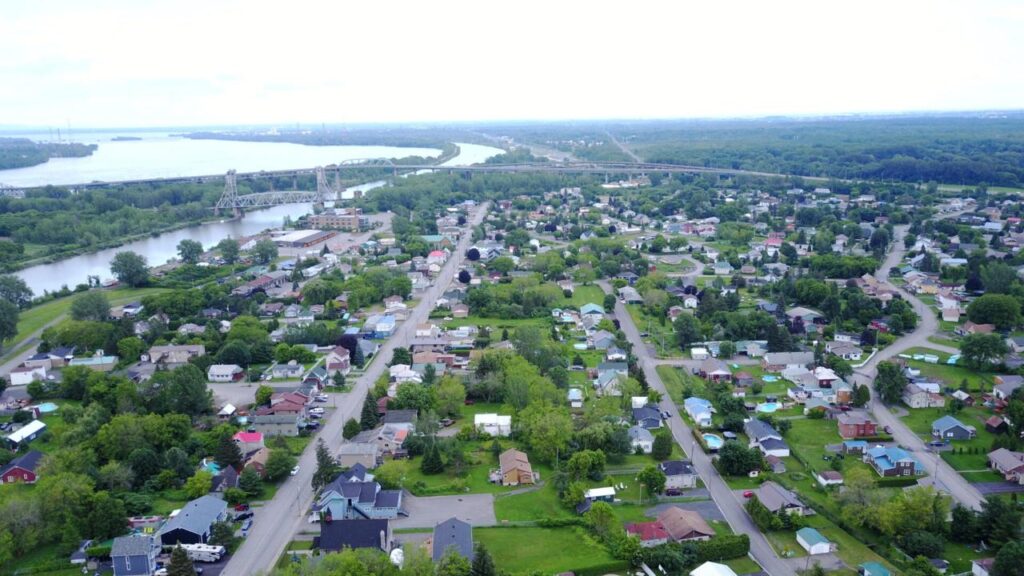
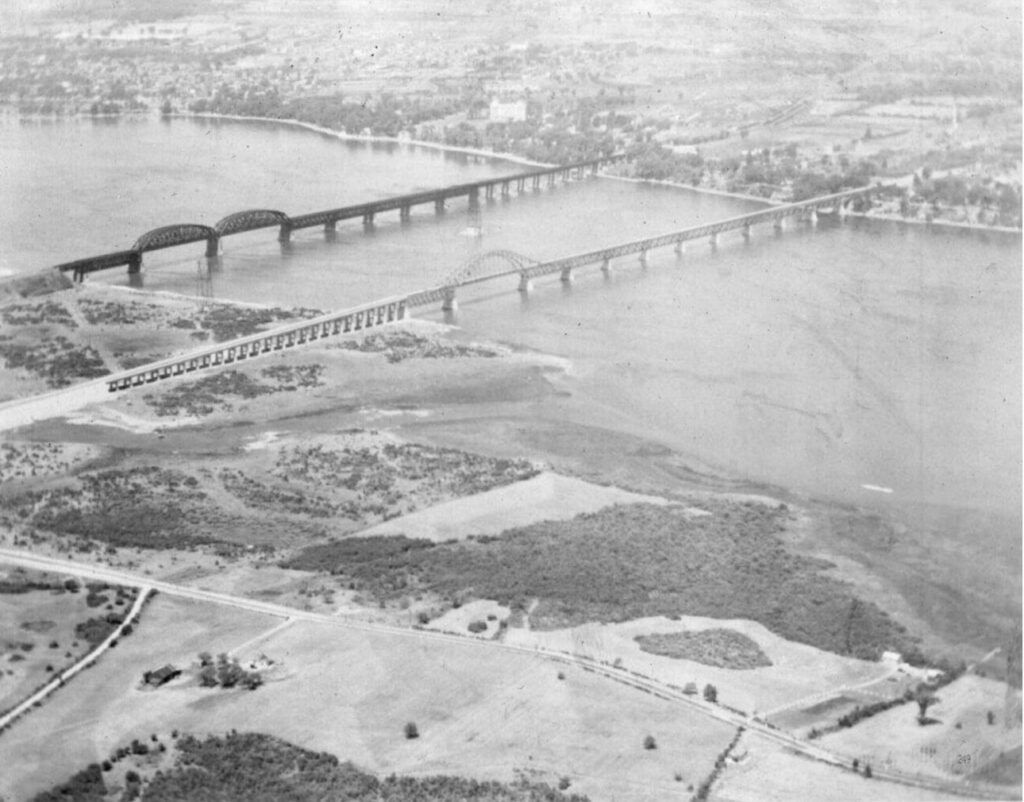
We are the Kanien’kehá:ka of Kahnawà:ke, also known as the Mohawks, a community of approximately 8,000 people located along the south shore of the St. Lawrence River, near the island of Montreal. We are one of eight Kanien’kehá:ka communities across Québec, Ontario, and New York, and one of the Six Nations of the Rotinonhsión:ni (Haudenosaunee) Iroquois Confederacy.
As Indigenous peoples, we have endured profound losses of language, culture, and identity through centuries of colonization. The impact on our community has been deeply painful, threatening our connection to who we are, to our land, and to our spirituality. Yet we remain a proud and resilient people, steadfast in our commitment to preserving and revitalizing our traditions, language, and ways of life.
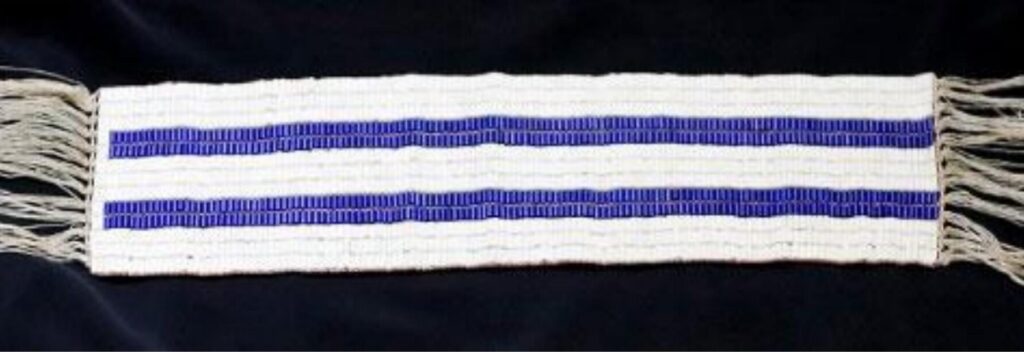
We believe in peaceful coexistence and mutual respect with the people around us. These values are reflected in and carried forward through our Two Row wampum belt: a white belt with two parallel purple rows, one representing the non-indigenous peoples in their sailing ship, and the other representing our people in a canoe. We also believe that the revitalization of our language and culture is an essential part of reconciliation.
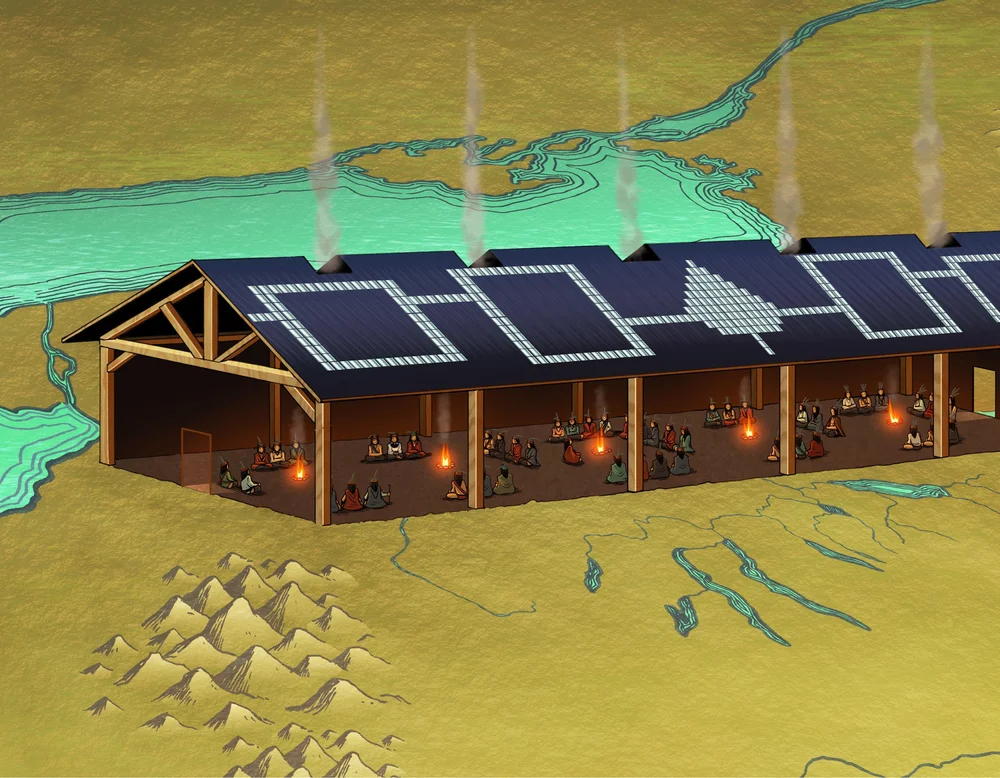
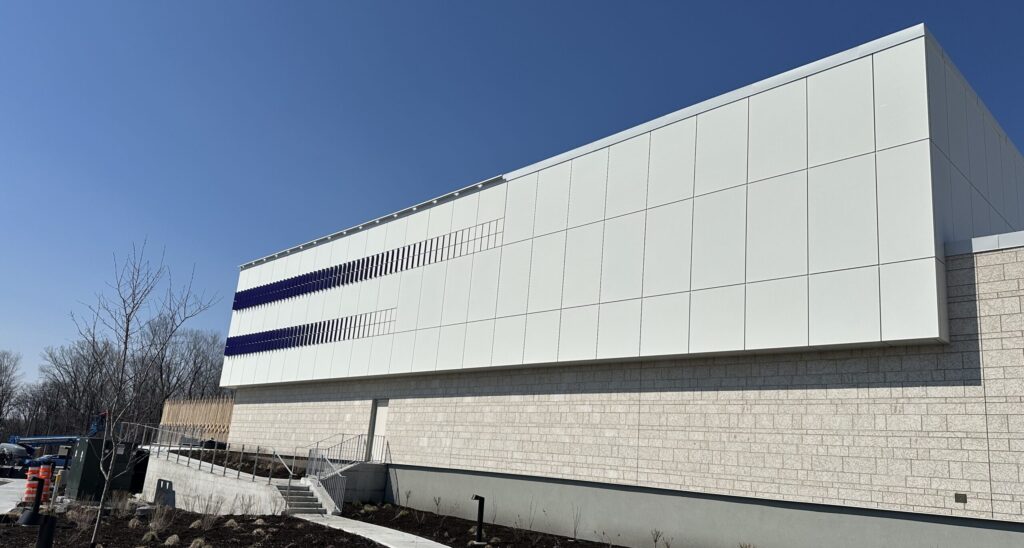
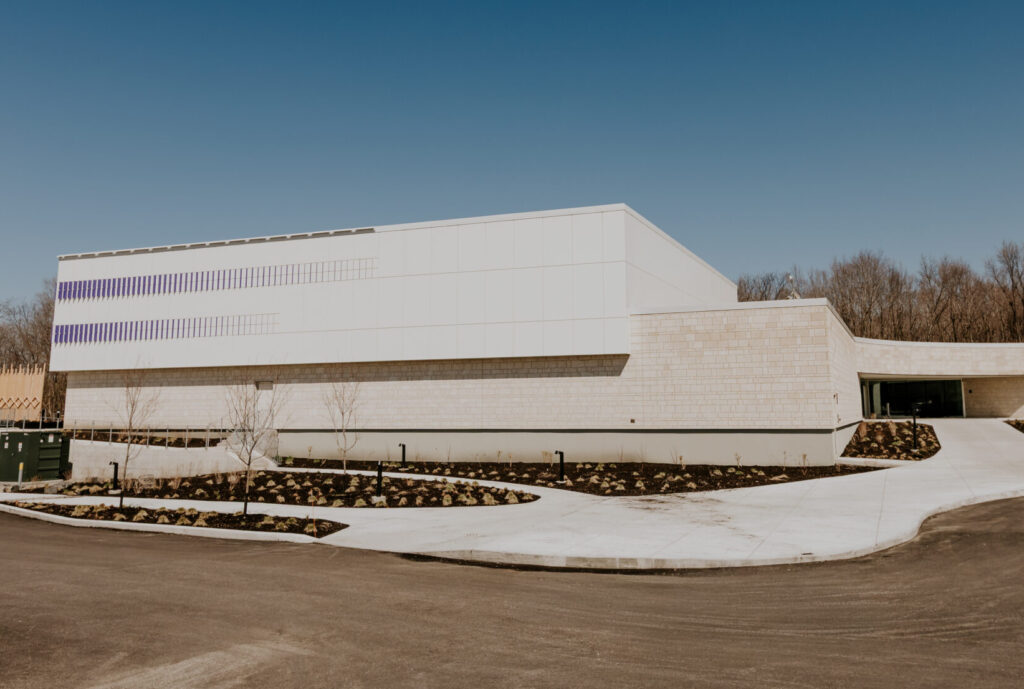
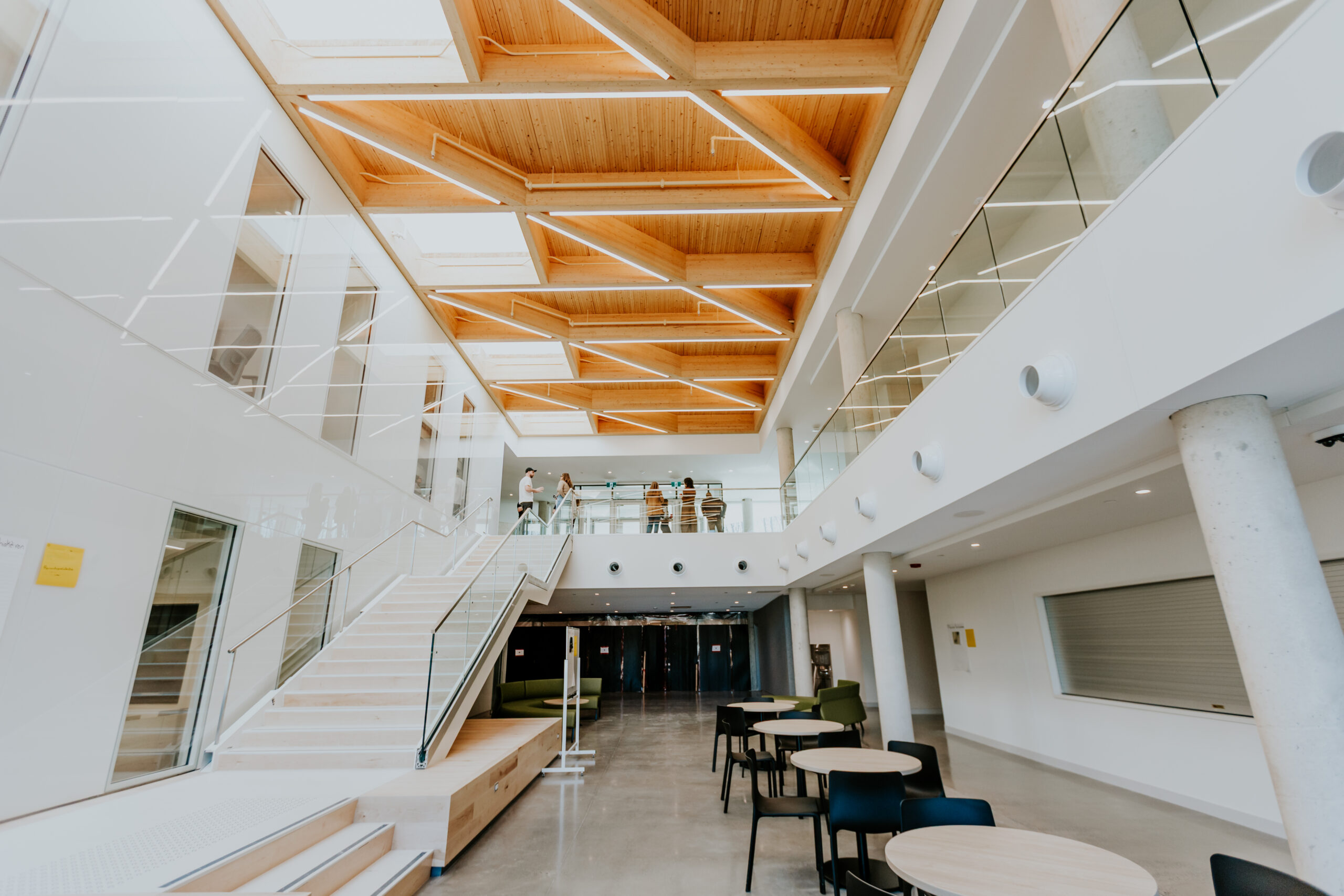
Kanatahkwèn:ke is the official name chosen for Kahnawà:ke’s new Cultural and Arts Centre. In our language, or Kanien’kéha, it means “where the village is picked up,” referencing the historic location of the village between 1696 and 1716, before the community migrated further east.It is also the place where negotiations for the Great Peace of Montreal took place in August of 1701, ending nearly a century of conflict between the Rotinonhsión:ni and the early French with their allies.
Photos by Vanessa Cyr
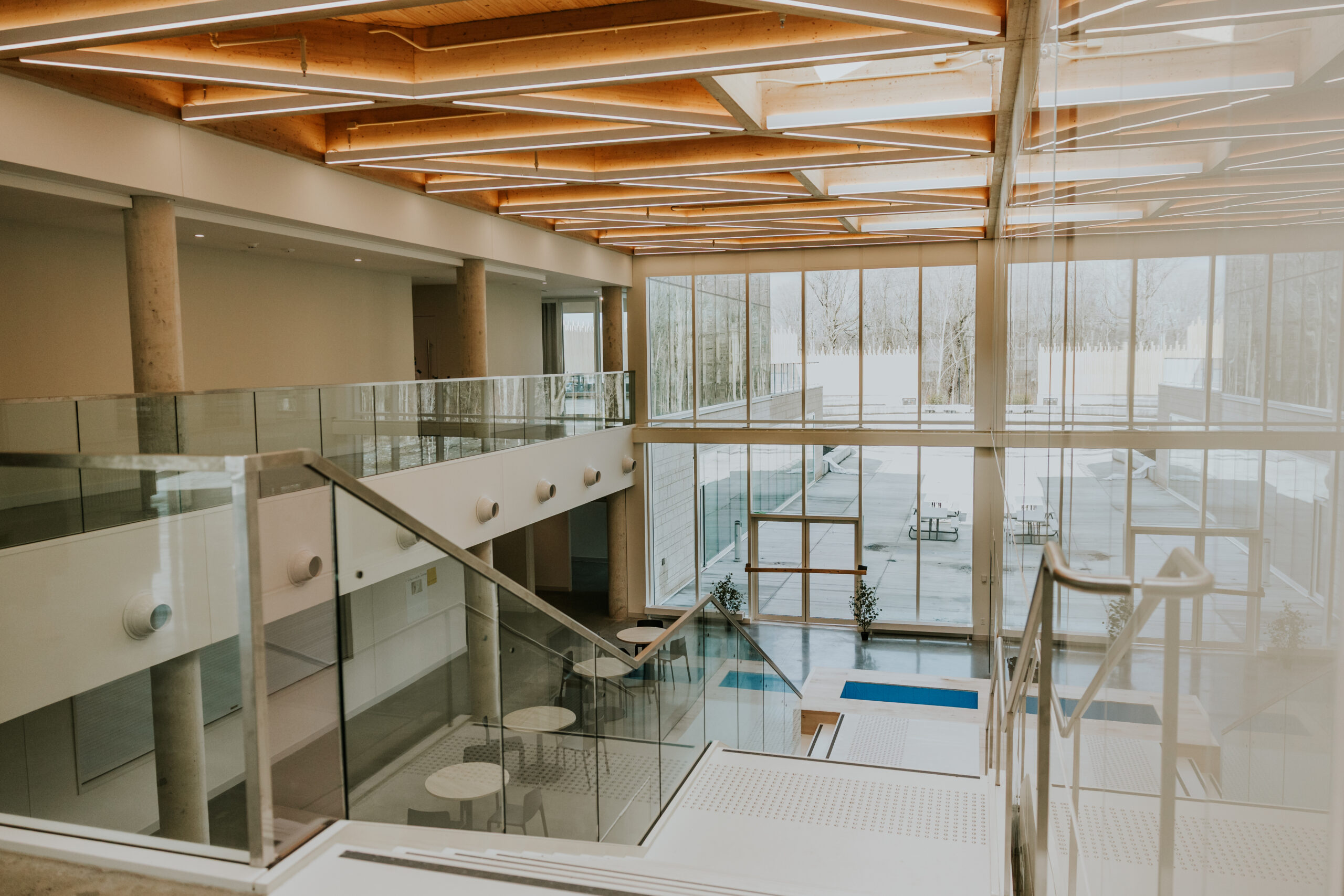
With strong community support, we built Kanatahkwèn:ke — a vibrant hub dedicated to the preservation and celebration of Kanien’kehá:ka language, culture, and heritage. It will serve as a gathering place for our community, while also welcoming visitors who are curious to learn more about our people and our culture.
We invite you to join us on this journey of reclaiming and strengthening our identity as Kanien’kehá:ka people, while helping ensure that our language and culture remain deeply rooted within our community so they can be passed on to our children, grandchildren, and future generations for years to come.